North Dakota State University Projects
NDSU @ Langdon, Field Trial: Wheat
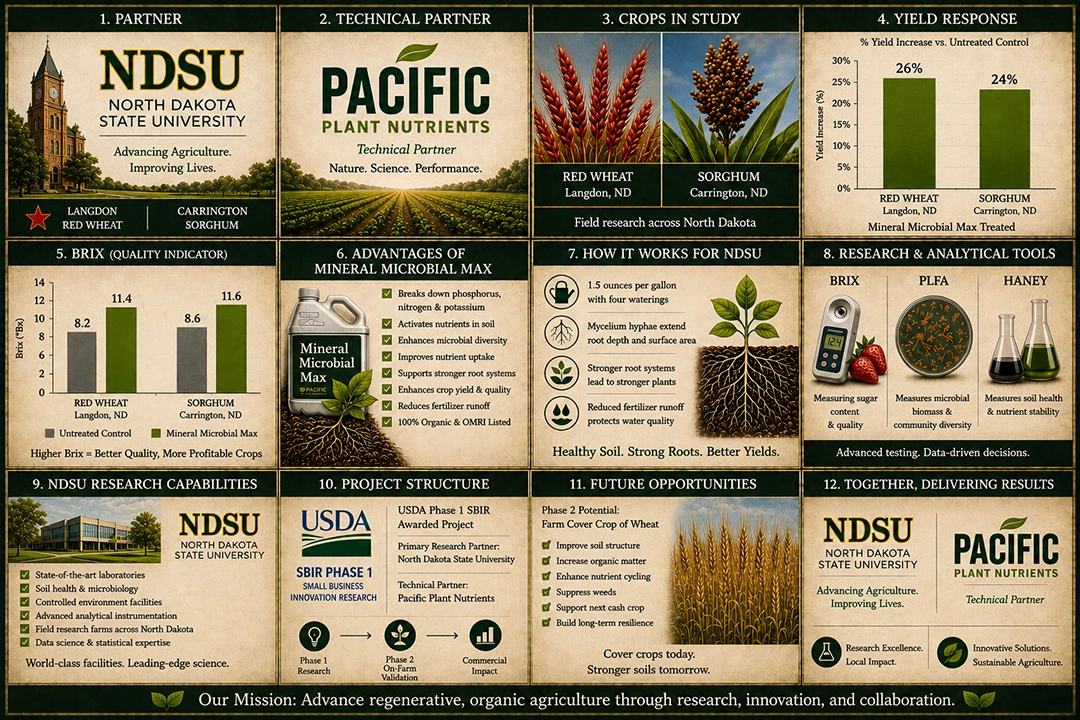
A trial using PRESTORATIVE™ is in process at Langdon, North Dakota on plots of conventional red Spring wheat. 1.5 ounces of PRESTORATIVE™ Mineral Microbial Max AG per gallon of water was applied with a foliar spray to the crops. Photos show the trial plot fields; non-trial wheat crops that were not fertilized with PRESTORATIVE™ can be seen in the background in some of the photos. Ladybugs and other biological markers (color, water retention etc.) were seen which were very encouraging.
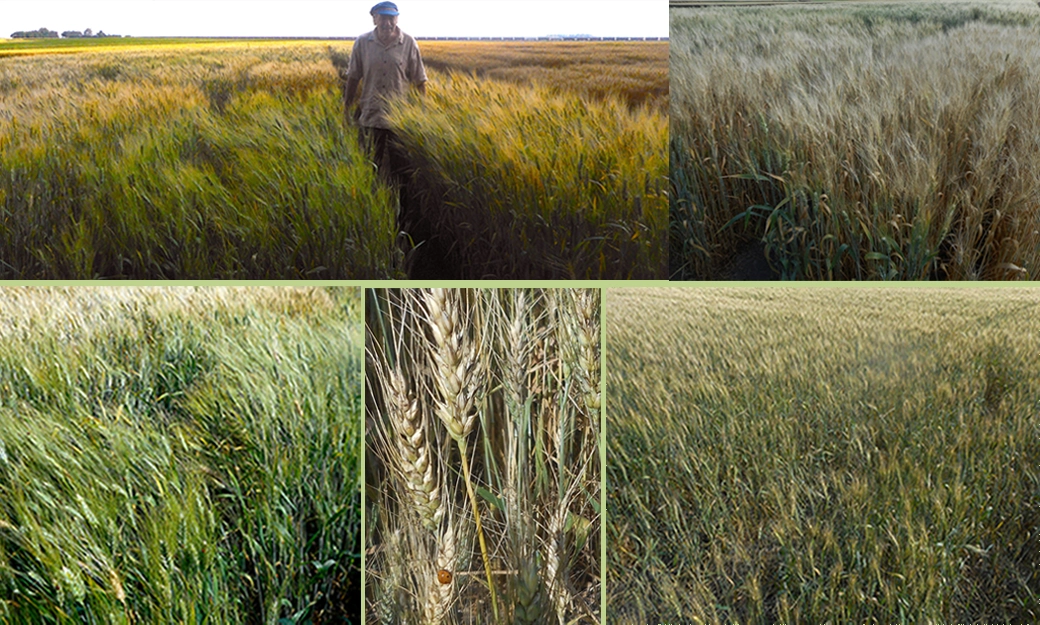
Additional Langdon Photos
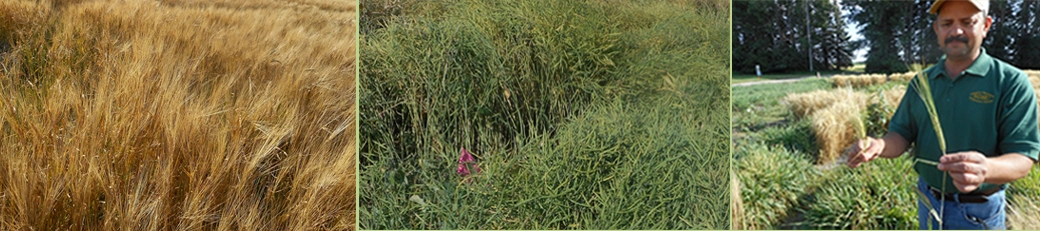
Left photo is wheat plants that were grown without receiving PRESTORATIVE™. See the difference. The second photo is of a Canola plant that was burned from the sun but recovered after being treated with PRESTORATIVE™. The area that was burned has new growth over it. The last photo is Venkat, Director of the Langdon Research Center at NDSU. He is showing and discussing the differences between two types of barley in this photo.
NDSU @ Carrington, Field Trial: Sorghum
A field trial is in process to study the effect of PRESTORATIVE™ on certified organic sorghum crops in Carrington, North Dakota. The photos show that sorghum cluster heads were well-formed with healthy biology including ladybugs. The plants were dense and appeared to be very healthy even though they are being grown under drought conditions. Actual data will be compiled after the harvest.
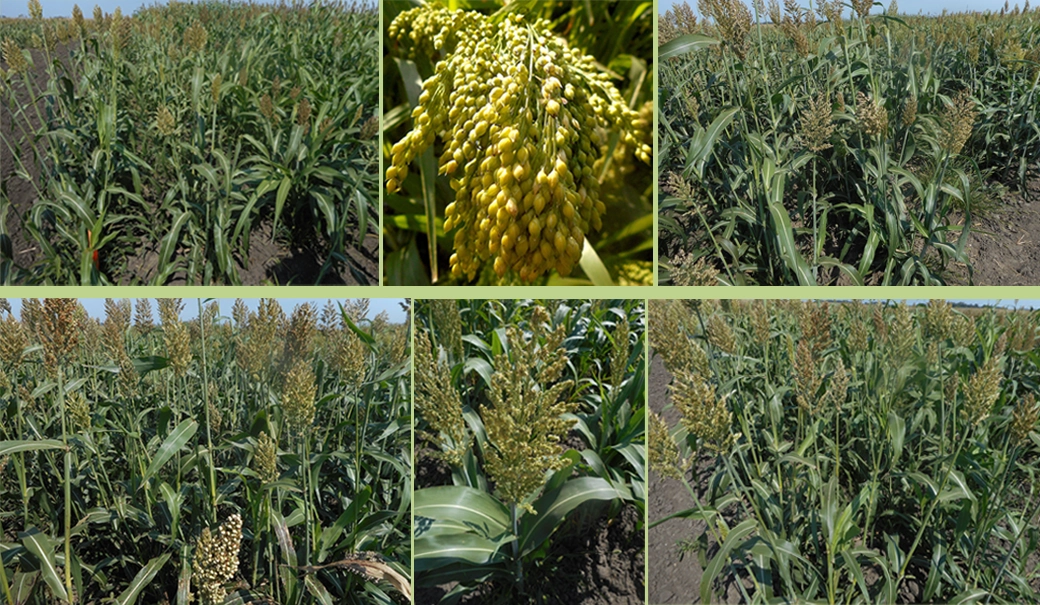
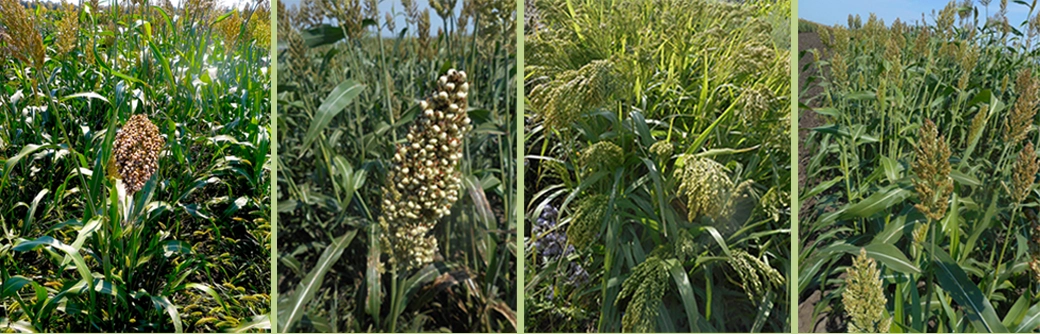
Crop Series for Field Trials @ Carrington in 2027
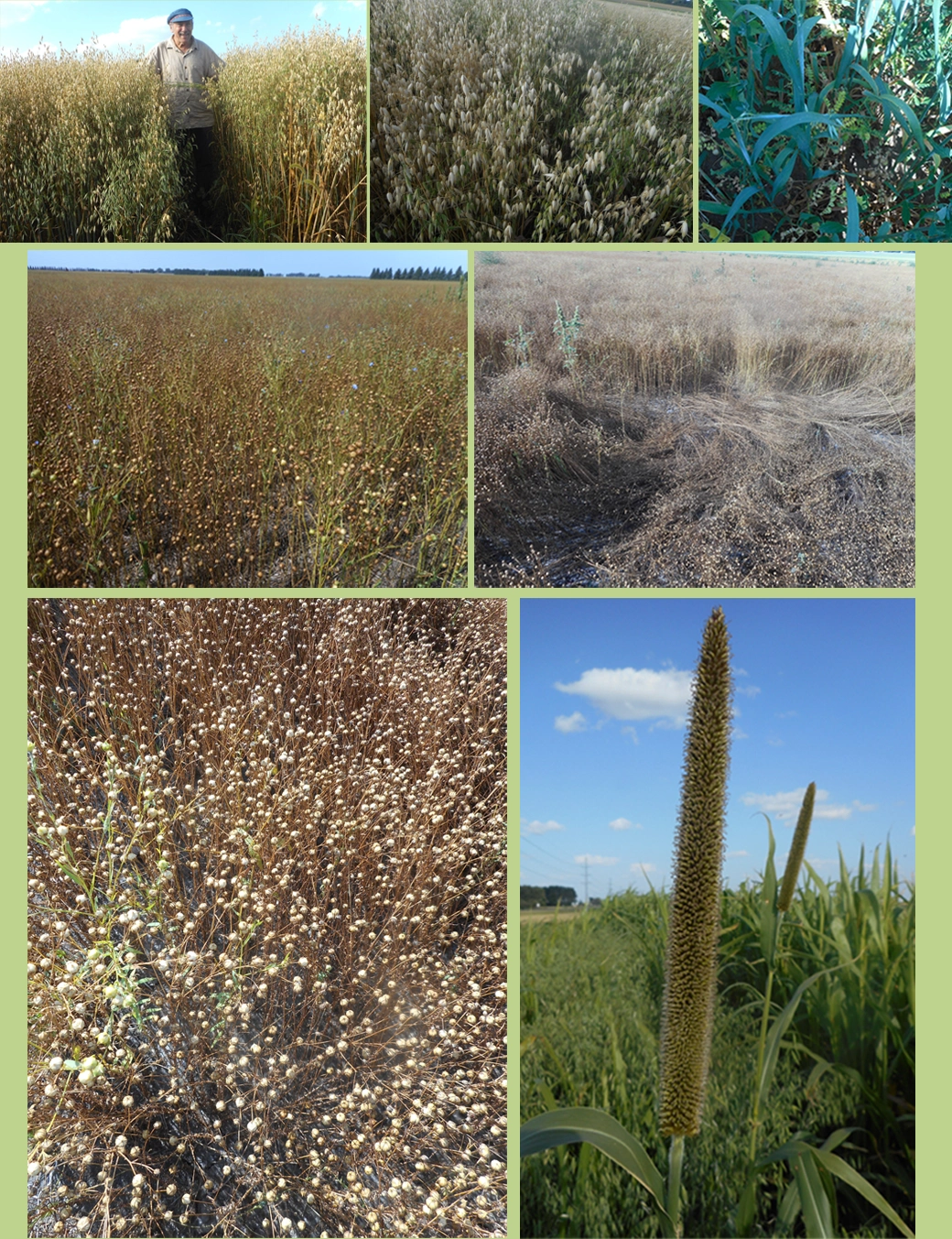
2027 Crops for field trial plots that will be treated with PRESTORATIVE™ at the NDSU farm @ Carrington, North Dakota—oats, millet, flax, and chickpea plants. Oats benefit circulatory system health. Flax is and important fiber and food crop for North Dakota. Chickpeas are nutrient-rich legumes and are being more popular worldwide. Millet is rich in protein, calcium, niacin, iron, vitamins A and B, and contains many antioxidants. There are several varieties of millet including Pearl, Finger, Foxtail, and Kodo.
Crops/Cover Crops @ Carrington Farm
Cover crops are non-harvested plants that are grown to protect, enrich, and improve the health of the soil between regular the regular crop growing season.
The following are some of the crops grown at the Carrington NDSU Research Center farm as crops to be harvested and/or cover crops.
Buckwheat
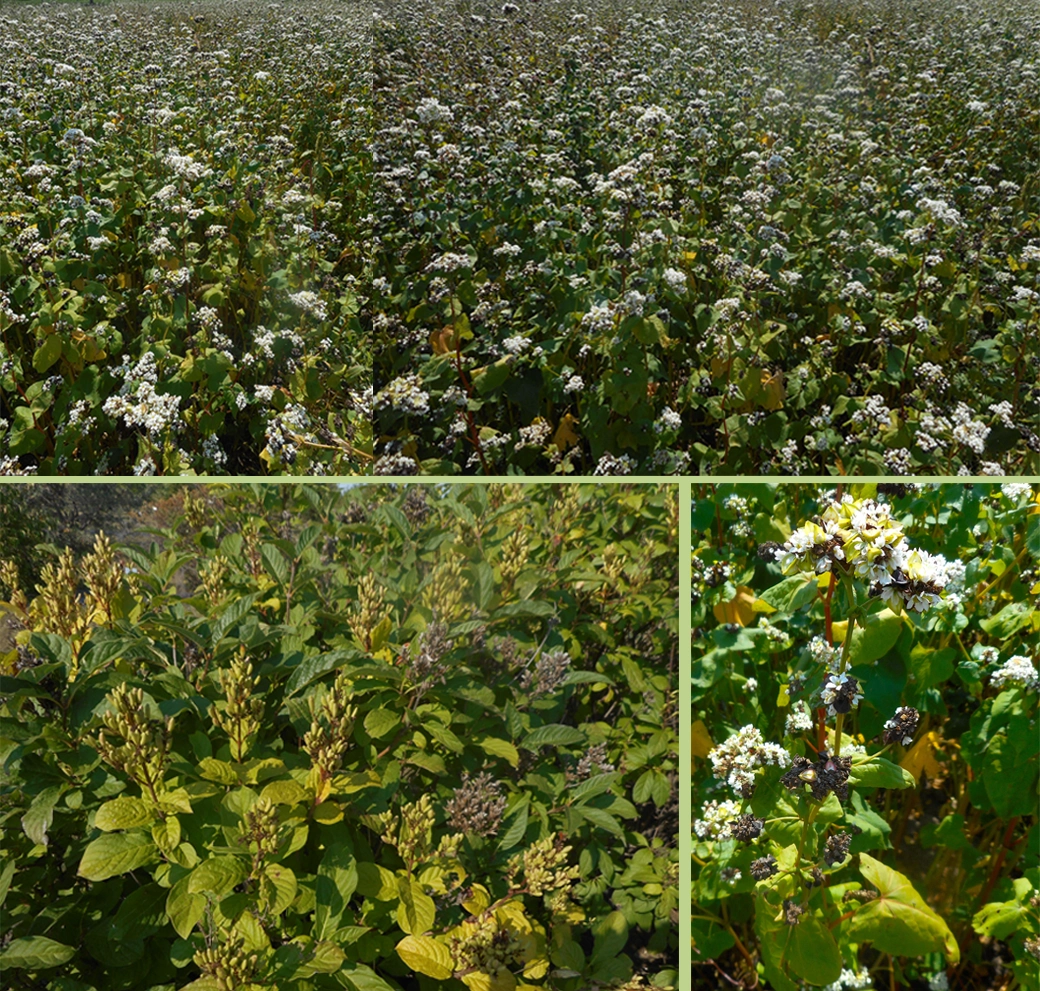
Buckwheat is a nutritious food and also makes a great cover crop. It helps move phosphorus from the soil to plants which is beneficial for soil biology.
Sunflowers, Lupin, Soy, Industrial Hemp, Canola
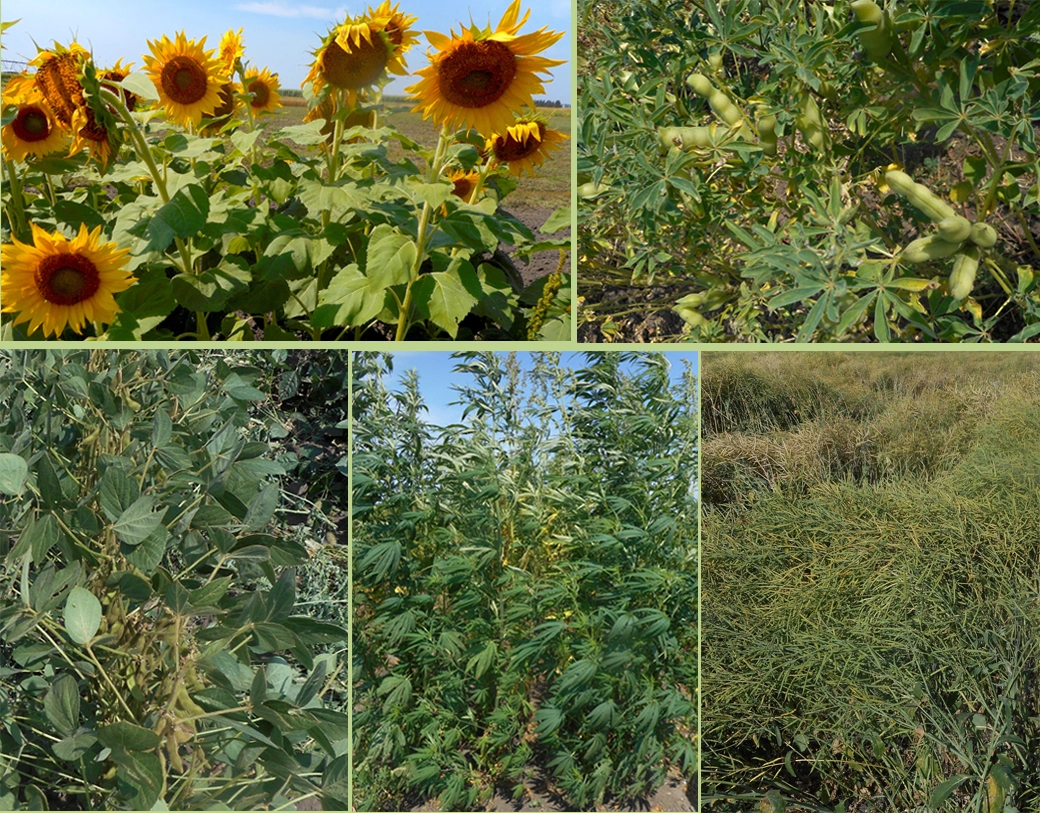
Beautiful sunflowers produce seeds for people and birds to enjoy. They help retain water in the soil and make good cover crops. Lupin is an edible plant that hold beneficial bacteria. Canola and Soy are major commodities in the U.S. midwest. Soy fixes nitrogen and helps shade out weeds. Industrial hemp has an almost infinite amount of uses.
Carrington Staff and Orchards
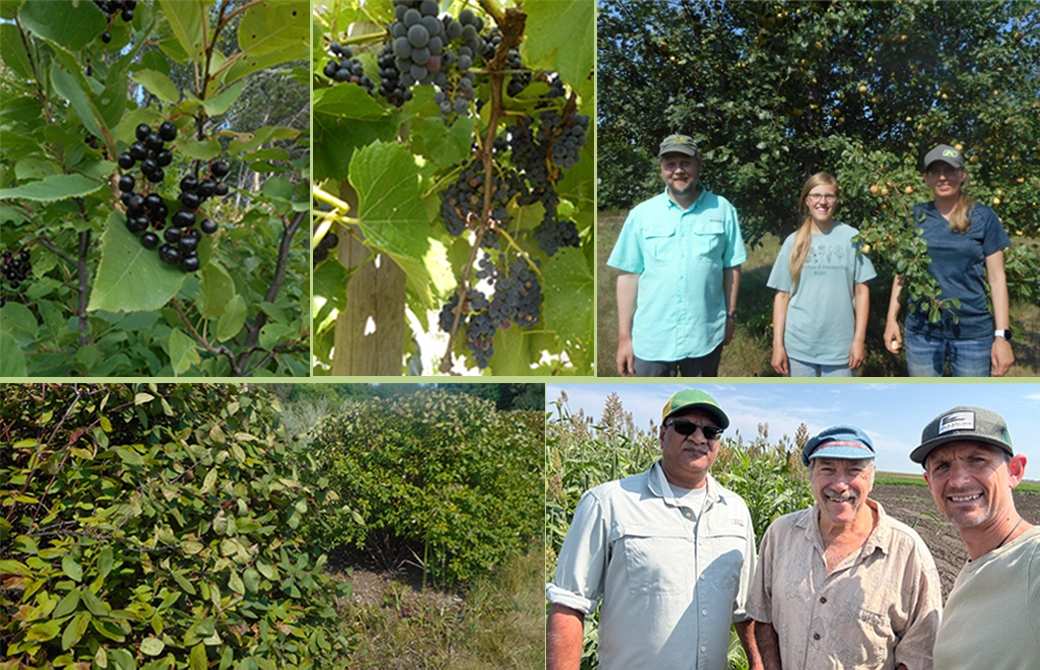
Aronia, grapes, and hascap berry bushes are also grown at the Carrington Research Center farm.
Menoken Farm
Advancing Soil Health Through Innovation & Education
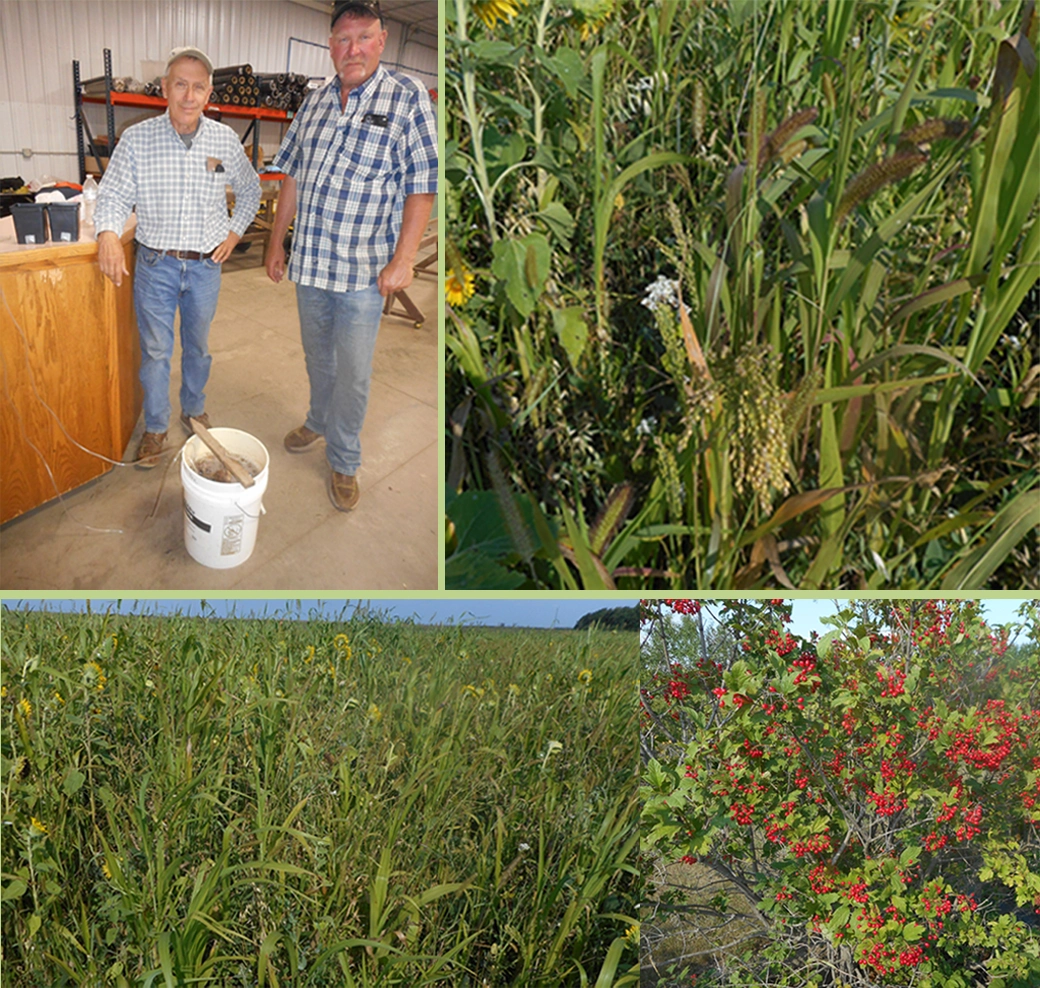
Menoken Farm is in Burleigh county North Dakota and is a soil conservation district established in 2009. They combine natural resources education, and a systemic approach to conservation. Jay and Darrell (in photo) host “Field Days“ to educate a group of 40—60 people on soil conditions, moisture retention, plant biology, and the benefits of deep root development and rich, healthy soil.
Menoken Farm grows a veritable food forest including collard greens, sunflowers, oats, rye, millet (2 types), alfalfa, radishes, legumes, flax, chickpea, buckwheat, vetch, turnips, sorghum, wheat, lentils, and winter peas. Some of these crops are also used as cover crops.
Broadleaf nitrogen fixer plants such as pinto and other beans, lentils, clover, soy, peas, and buckwheat are used for the livestock to utilize quickly. They also form a blanket to keep certain weeds at bay, often helping the taller plants like rye, wheat, corn, and sorghum gain a good biological start.
The more deeply-rooted crops—radishes, turnips, and alfalfa— build aggregates to improve infiltration and increase aeration. These crops can open channels to support earthworm and organism infiltration into the porous spaces created. This allows for deeper root penetration which forms a “home” within the soil structure.
The 5 principles of soil building are soil armor, minimal soil disturbance, plant diversity, continual live plant/root, and livestock integration. These 5 principles are explained in the Menoken Farm booklet entitled Soil Health Principles.
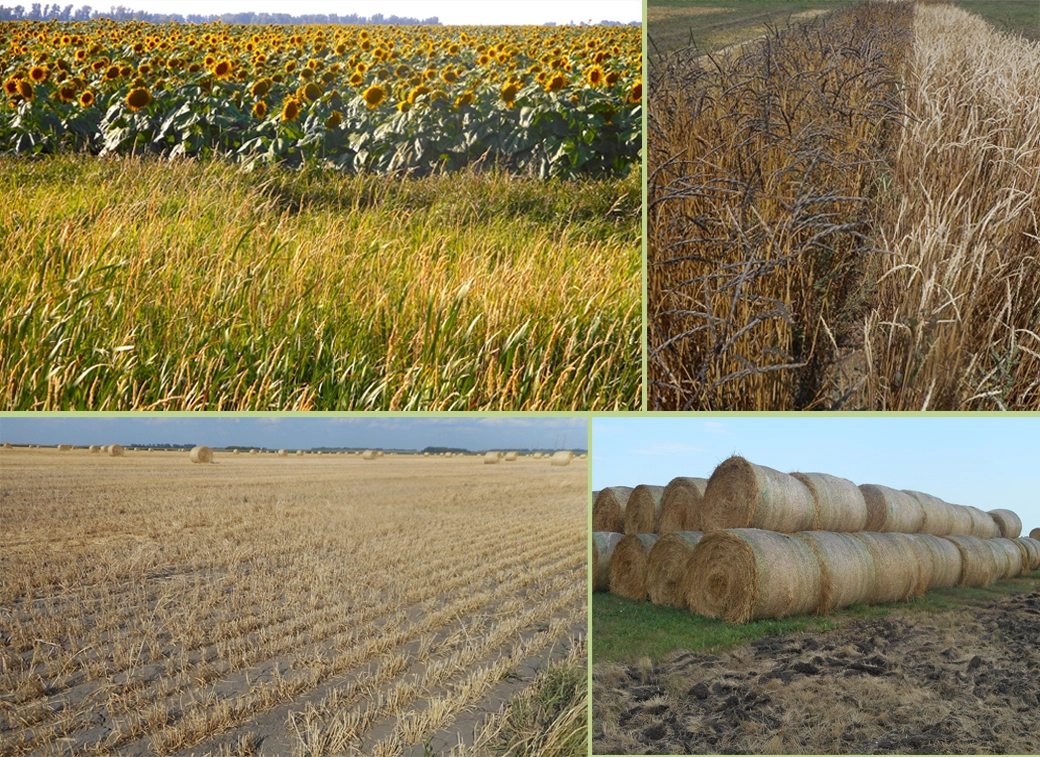
North Dakota Wheat & Bales